
Thinking about a winter roof replacement? Plenty of Hickory homeowners find out in November or December that their roof won’t make it to spring. This guide covers whether shingles can go on in cold weather, what the shingle makers say about it, and how to decide between replacing now or waiting.
Short answer: yes, you can replace a roof in winter in North Carolina. It takes a crew that watches the weather and follows the manufacturer’s cold-weather steps, like hand sealing when shingles can’t seal on their own.
Table of Contents
Can You Replace a Roof in Winter in North Carolina?
Yes. Asphalt shingle roofs can be installed in cold weather, and a winter roof replacement is common in the Hickory area. Shingle makers don’t ban cold-weather installs. They give extra instructions for them, because cold changes how shingles bend, lie flat and seal.
What matters is the day-to-day weather, not the month on the calendar. A dry, sunny winter day in the Foothills can be a fine roofing day. A day of freezing rain, ice on the deck or snow on the roof is not, and a careful crew will reschedule rather than push through it.
If your roof is leaking now, don’t wait for spring. A failing roof lets water into the decking, insulation and ceilings every time it rains. Start with a free roof inspection so you know whether you need a repair to get through the season or a full replacement.
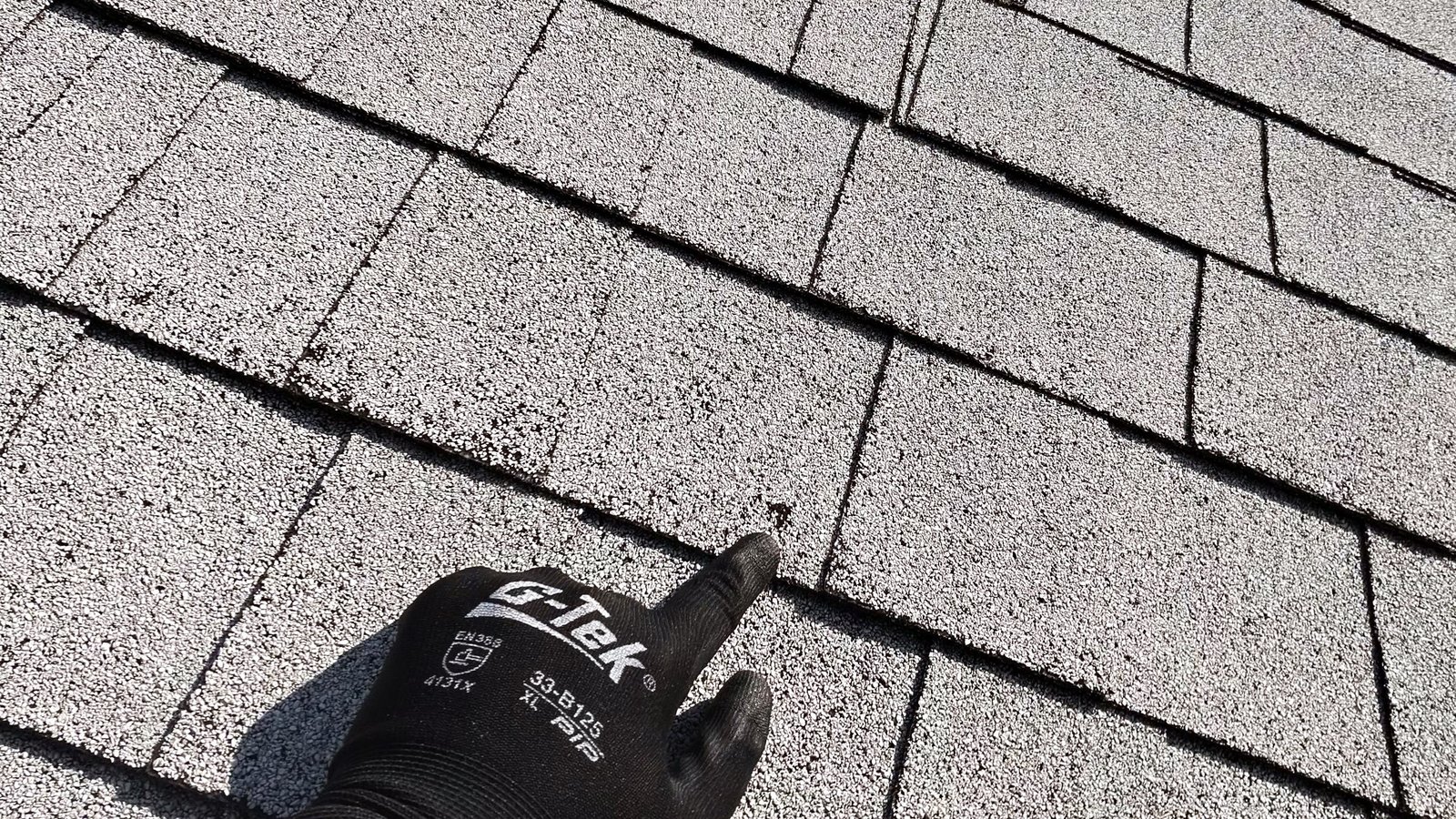
What Cold Weather Does to Asphalt Shingles
Shingle makers spell out the cold-weather issues in their own documents. Here’s what the manufacturers say, in plain English.
Shingles get stiffer and can crack
TAMKO’s application instructions define cold weather as below 40°F for most of its shingles (and below 25°F for its StormFighter FLEX and HailGuard lines). In those conditions, TAMKO says care must be taken to avoid damage to the edges and corners of the shingles, and hip and ridge shingles should be warmed until they’re pliable before they’re bent. You can read this in TAMKO’s Heritage shingle application instructions.
The sealant strip needs sun and warmth
Every architectural shingle has a strip of adhesive that bonds it to the shingle below. That strip is activated by heat from the sun. In a technical bulletin on cooler-weather installation, TAMKO explains that shingles installed in cooler weather, or on parts of the roof that don’t get direct sun, may not seal fully until the weather warms up. Dust blown under unsealed shingles can also get in the way of sealing.
Shingles may not lie flat right away
The same TAMKO bulletin notes that cold shingles are less flexible, so some may not lie perfectly flat at first. That uneven look usually fades as the sun warms the roof, and often after the roof goes through a warm season.
CertainTeed’s application instructions for its Landmark shingles say the same kind of thing: sealing may be delayed in cool weather, hand sealing may be needed if shingles haven’t sealed after a reasonable time, and shingles must be warm enough to form hips and ridges without cracking. For more on these two brands, see our CertainTeed vs TAMKO shingle comparison.
How a Good Crew Handles a Winter Roof Replacement
A winter roof replacement done right follows the shingle maker’s cold-weather instructions. Here’s what that looks like on the roof:
- Hand sealing when the instructions call for it. TAMKO’s instructions say hand sealing is required when cold, wind or dust may keep shingles from sealing, using dabs of approved roofing adhesive on the back of each shingle. The adhesive has to be applied thinly, because too much can cause blistering.
- Careful handling of cold shingles. Bundles stored somewhere warmer, shingles handled gently at the edges and corners, and hip and ridge caps warmed before they’re bent.
- Watching the forecast. Tear-off only happens when the whole roof can be dried in the same day. No one should strip a roof with freezing rain on the way.
- A dry, clean deck. Frost, ice and snow come off before underlayment goes down. Nothing gets installed over a wet or icy deck.
- Proper nailing. Cold shingles are stiffer, so the crew checks that nails are driven flush, not overdriven or left high.
Most roof installs take one to two days, so a crew only needs a short stretch of decent weather. That’s one reason a winter roof replacement is usually very doable in Western North Carolina.
Pros and Cons of a Winter Roof Replacement
Why winter can work in your favor
- You stop a leak before it does more damage. Waiting months on a failing roof means more chances for water to reach your decking, insulation and drywall.
- Scheduling can be easier. Many homeowners put roofing off until spring, so winter calendars are often less crowded than peak season.
- You head into spring storm season covered. A new roof in place before spring thunderstorms and hail is one less thing to worry about.
The tradeoffs
- Weather delays. Freezing rain, snow and icy mornings can push the start date back a few days.
- Sealing takes longer. Some shingles, especially on shaded or north-facing slopes, may not fully seal until warmer weather. Hand sealing helps cover that gap.
- Shorter days. Less daylight means less working time each day, which matters on bigger or steeper roofs.
Should You Replace Your Roof Now or Wait Until Spring?
It comes down to the shape your roof is in today:
- Active leaks, missing shingles or soft spots: don’t wait. Get it inspected now. A roof repair may hold it until spring, or a replacement may be the better fix.
- Storm damage from wind or hail: document it and have it looked at soon. Our storm damage roof repair page explains what we look for, and our guide to spotting storm chaser roofers helps you vet anyone who knocks on your door.
- An old roof with no leaks yet: you have time to plan. Read how long a roof lasts in North Carolina, and get a free inspection so you know how much life is left.
- Thinking about a cheaper overlay: read our roof over vs tear-off guide first, since NC code limits when a roof over is allowed.
Code and permit rules don’t change with the season. If you’re planning a replacement, our guide to roof replacement permits in NC explains when one is needed in Hickory and Catawba County.
Paying for a Roof Replacement This Winter
A roof rarely fails on a convenient schedule. Our new roof cost guide for Hickory explains what drives the price, and you can see your options on our roof financing page. For a quick starting number, try our instant roof quote, then we can confirm it with a free inspection.
Iconic Roofing handles roof replacement in Hickory and across Western North Carolina, including Lenoir, Statesville and Lincolnton. We’re licensed and insured in NC and open 24/7. Call 828-501-0742 to book a free roof inspection.
FAQ: Winter Roof Replacement in NC
Can you replace a roof in winter in North Carolina?
Yes. Asphalt shingle roofs can be installed in cold weather as long as the crew follows the shingle maker’s cold-weather instructions and works on dry days without ice, snow or freezing rain on the roof.
What temperature is too cold to install shingles?
There’s no single number for every shingle. TAMKO, for example, treats below 40°F as cold weather for most of its shingles and requires extra steps such as careful handling and hand sealing, rather than a hard stop. Check the instructions for the exact shingle on your roof.
Will my new shingles seal in the winter?
They may take longer. Shingle sealant strips are activated by heat from the sun, so shingles installed in cold weather or on shaded slopes may not seal fully until it warms up. Hand sealing is used when the manufacturer’s instructions call for it.
How long does a winter roof replacement take?
Most roof installs take one to two days. Winter weather can push the start date back, since tear-off should only happen when the roof can be dried in the same day.
Does Iconic Roofing offer free roof inspections in winter?
Yes. Iconic Roofing offers free roof inspections year-round in Hickory and across Western North Carolina. Call 828-501-0742 or start with our instant roof quote.